
Presentation
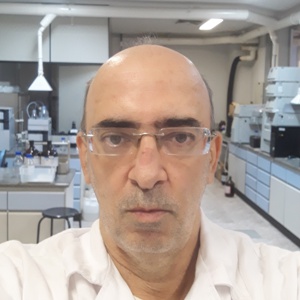
The Institutional Spectrometry Laboratory houses equipment for various spectroscopic techniques, including absorption in the UV-Vis, NIR, and IR regions, Raman scattering, and fluorescence emission.
Equipment
Details about the equipment that can be found in the laboratory.
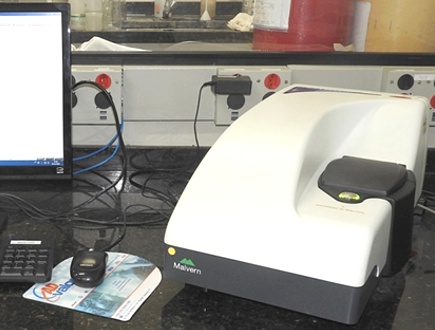
Particle Size Analyzer - Malvern Zetasizer Nano ZS-Zen3600
Laser: Red He-Ne – wavelength 632.8 nm
Particle size range: 0.3 nm – 10.0 microns
Zeta potential size range: 3.8 nm – 100.0 microns
Measurement principle: DLS (Dynamic Light Scattering)

Particle Size Analyzer- LUM LUMiSizer
The LUMiSizer is an instrument for accelerated analysis of the stability of dispersions, such as suspensions, emulsions, and (nano, micro) particles. It is an analytical centrifuge equipped with STEP™ (Space- and Time-resolved Extinction Profiles) optical technology, which enables real-time monitoring of sedimentation, creaming, flocculation, and coalescence processes.
The instrument reaches up to 4,000 rpm (≈2,300 g), accelerating sedimentation and creaming phenomena and reducing the evaluation time of stability. Its optical system, based on a light source (λ = 865 nm) and detectors, records transmission profiles indicating sample instabilities over time, allowing detailed tracking of particle or droplet migration.
The LUMiSizer analyzes up to 12 samples in parallel, from 4 ºC to 60 ºC, under identical conditions, with automated data processing to provide parameters such as sedimentation rates, size distributions, and stability indices. It is widely applied in research and development of formulations in the pharmaceutical, cosmetic, food, and advanced materials sectors.
It can be used with both aqueous and organic solvents.
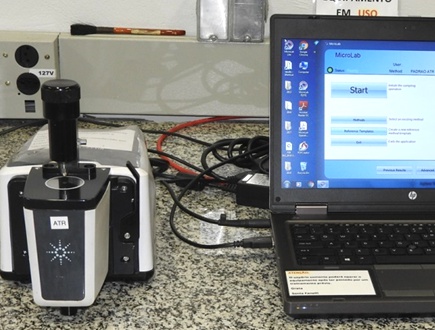
FTIR Spectrofotometer - Agilent Cary 630
The Agilent Cary 630 FTIR is a compact mid-infrared spectrometer designed to deliver the capabilities of traditional, much larger FTIR spectrometers — but without the complexity and maintenance costs.
The Agilent Cary 630 FTIR is used in daily laboratory routines for molecular compound identification. It operates in the spectral range of 4000 to 400 cm⁻¹ and offers spectral resolution of up to 2 cm⁻¹.
It features three sampling accessories to accommodate different sample types and sensitivities, such as liquids, powders, pastes, and gels. These include:
Diamond ATR: The attenuated total reflectance (ATR) system is available as a single-reflection ATR.
Transmission: A classic infrared sampling interface, allowing the measurement of solids via KBr pellets and liquids via KBr windows.
Diffuse Reflectance: For quantitative and qualitative measurement of powder and solid samples.
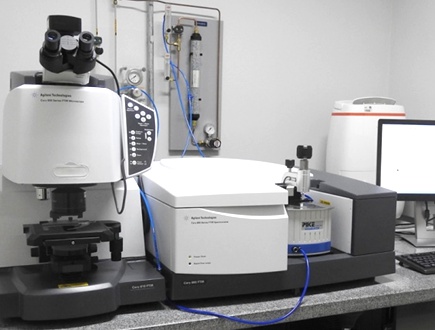
FTIR Spectrophotometer- Agilent Cary 660
The Agilent Cary 660 FTIR spectrometer covers the spectral range from mid-infrared to far-infrared, with a resolution of up to 0.1 cm⁻¹.
With the appropriate optical configuration—achieved by switching between KBr or Mylar beam splitters—analyses can be performed in the spectral ranges of 4000 to 400 cm⁻¹ (MID) and 700 to 30 cm⁻¹ (FAR), in either transmission or ATR mode.
The system is equipped with the Agilent Cary 610 FTIR microspectroscopy system, featuring a sliding ATR accessory (Germanium – Ge micro-crystal).
The Cary 610 FTIR microscope is a point-detection system ideal for analyzing small and heterogeneous samples through different measurement modes, such as transmission, reflection, and ATR.
Cary 660 FTIR Spectrometer Coupled with Cary 610 FTIR Microscope:
Light Source: High-energy ceramic source for Mid- and Far-Infrared.
Detectors:
High-sensitivity MCT (0.25 mm × 0.25 mm) – Cary 610 FTIR Microscope.
Cooled DLaTGS for Mid-IR (MID).
Room-temperature DLaTGS for Far-IR (FAR).
Beam Splitters:
KBr for Mid-IR (MID) analysis.
Mylar 50 µm and Mylar 6.25 µm for Far-IR (FAR) analysis.
Accessories: Pike MIRacle ATR with Diamond crystal.
Cary 610 FTIR Microscope:
Objectives:
4x Visible (NA 0.2, Working Distance 38 mm).
15x Infrared (NA 0.62, Working Distance 21 mm).
Binoculars: Trinocular (15x eyepieces) with a high-resolution visible camera.
Accessory: Attenuated Total Reflectance (ATR) – Sliding accessory with Germanium (Ge) micro-crystal.

FT-NIR Near-Infrared Spectrophotometer – Bruker Tango
Designed for routine analyses in quality control, it enables fast and non-destructive measurements of solid, pasty, and liquid samples, offering high spectral accuracy and instrumental robustness.
Types of analyses:
– Diffuse reflectance measurements in solid samples (ground or whole) and liquid samples (in vials or capsules)
– Qualitative and quantitative assessments of chemical composition based on calibrated models
– Applicable to multiple sectors: food, feed, pharmaceutical, cosmetics, polymers, etc.
Light Source: Tungsten lamp (air-cooled, 5 V / 7 W) with an average lifetime of 9,000 hours
Spectral range: 11,500 to 4,000 cm⁻¹ (approximately 870 to 2,500 nm)
Spectral resolution: Better than 4 cm⁻¹
Reproducibility: < 0.04 cm⁻¹
Accuracy: < 0.1 cm⁻¹ (at 7181 cm⁻¹)
Sample presentation:
– Cups, disposable capsules, or Petri dishes
– Background measurements performed without removing the sample
– Sampling system with a gold-coated integrating sphere
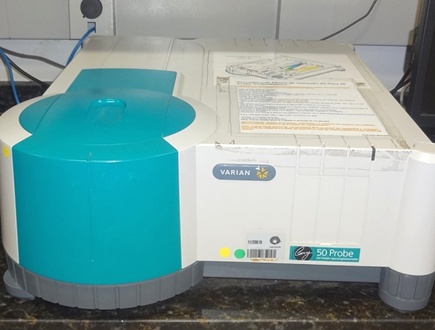
UV-Vis Spectrophotometer - Agilent Cary 50
Light source: Xenon lamp.
Spectral range: 200–1100 nm.
Scan speed: 60 nm/min to 24,000 nm/min.
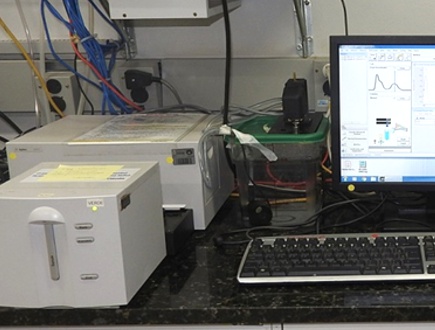
UV-Vis Spectrophotometer – Agilent HP 8453
Light sources: Tungsten and Deuterium lamps.
Spectral range: 190–1100 nm.
Slit width: 1 nm.
Resolution: Less than 1.6 nm.
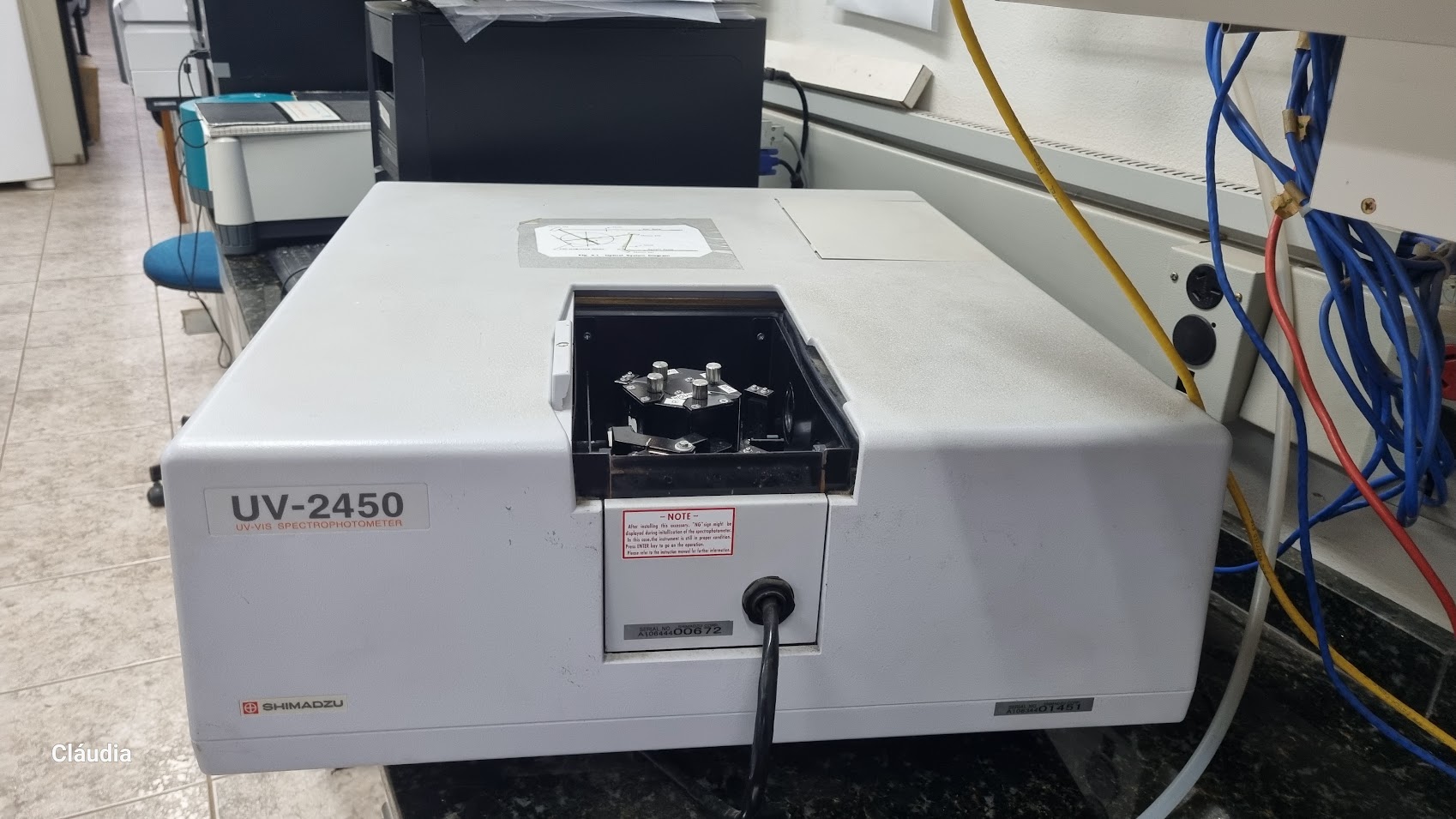
UV-Vis Spectrophotometer - Shimadzu UV-2450
The UV-2450 is a high-precision spectrophotometer designed for optical analysis of liquid and solid samples. With a wavelength range from 190 to 900 nm, it enables absorbance and diffuse reflectance measurements, providing reliable data on composition, purity, and optical properties.
Equipped with an integrating sphere (ISR-2200) for solid samples and operated through the UVProbe software, the system offers accurate and versatile results. Its applications span across chemistry, physics, materials science, biotechnology, and environmental studies.
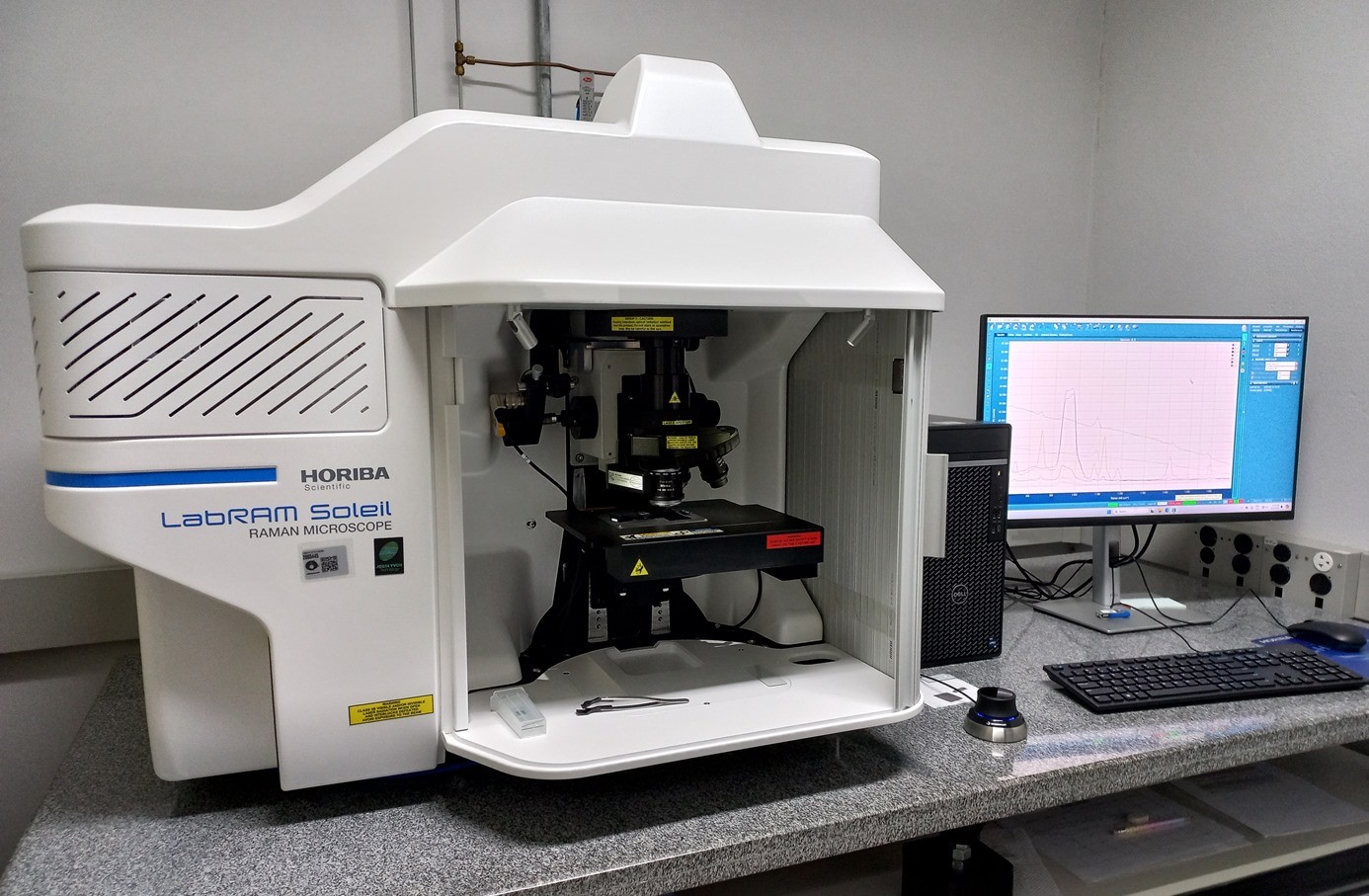
Confocal Raman Spectrometer - Horiba LabRAM Soleil
The Horiba LabRAM Soleil Confocal Raman Spectrometer is a highly automated instrument (laser control, gratings, objective recognition, auto-calibration, etc.) suitable for faster imaging. It offers advanced optical visualization modes that facilitate analysis and topographic data acquisition. The system includes a true confocal microscope coupled to the spectrometer, enabling non-destructive Raman scattering analysis of samples with small areas and volumes, as well as photoluminescence studies.
Sample types: solid, liquid, gas, etc.
Spatial resolution: XY ~ 0.5 µm and Z ~ 1.5 µm
Spectral resolution (variable): for 532 nm laser and 2400 g/mm grating: 0.7 cm⁻¹
Gratings available: 600, 1800, and 2400 g/mm
Spectral range: 30 cm⁻¹ to 4000 cm⁻¹ (depending on laser and grating)
Lasers: 532, 638, and 785 nm
Detection: cooled UV-Vis CCD (256×1024)
Accessories and capabilities:
Motorized XY and Z mapping stage (with Autofocus)
3D imaging
Faster mapping: Swift and SmartSampling modes
Multivariate analysis: MVA Plus
Particle verification and analysis: ParticleFinder
Spectral library: IDFinder
Linkam heating stages: from 20 to 1500 °C and -196 to 600 °C.
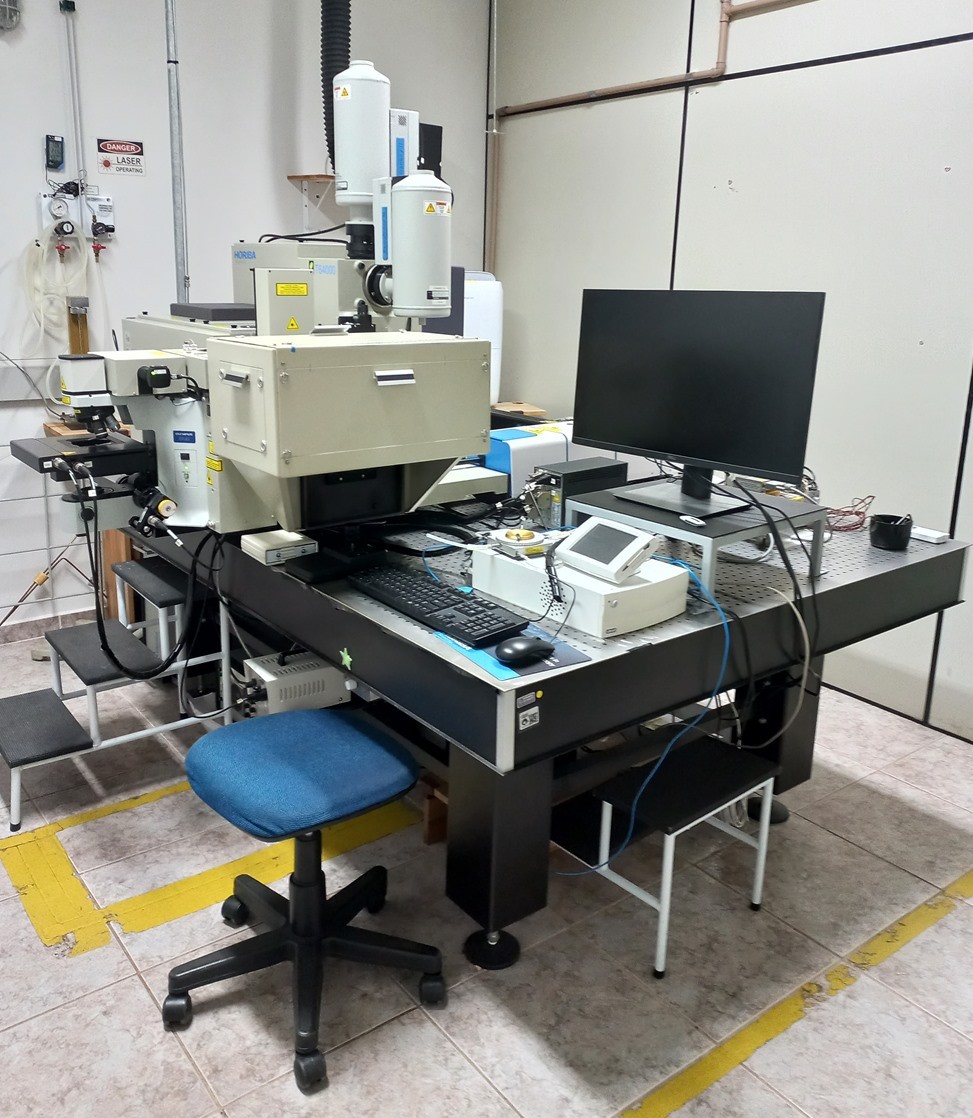
Confocal Raman Spectrometer - Horiba T64000
The Horiba T64000 Raman spectrometer is a high-resolution instrument equipped with a true confocal microscope, allowing non-destructive analysis and discrimination of small sample areas. It features a triple monochromator system that enables spectral information acquisition in the low-frequency region. In addition to Raman scattering analysis, the system also supports photoluminescence measurements.
Sample types: solid, liquid, gas, etc.
Spatial resolution: XY ~1 µm and Z ~1.5 µm
Spectral resolution: > 0.3 cm⁻¹
Gratings: 600 and 1800 g/mm
Monochromator modes:
Triple (subtractive) → 1800 g/mm: spectral range starting from 10 cm⁻¹
Single → 1800 g/mm: spectral range starting from 100 cm⁻¹
Lasers: 532, 633, and 785 nm
Detection: UV-Vis CCD (512×1024)
Accessories and capabilities:
Motorized XY and Z mapping stage (with Autofocus)
3D imaging
Linkam heating stages: from 20 to 1500 °C and -196 to 600 °C
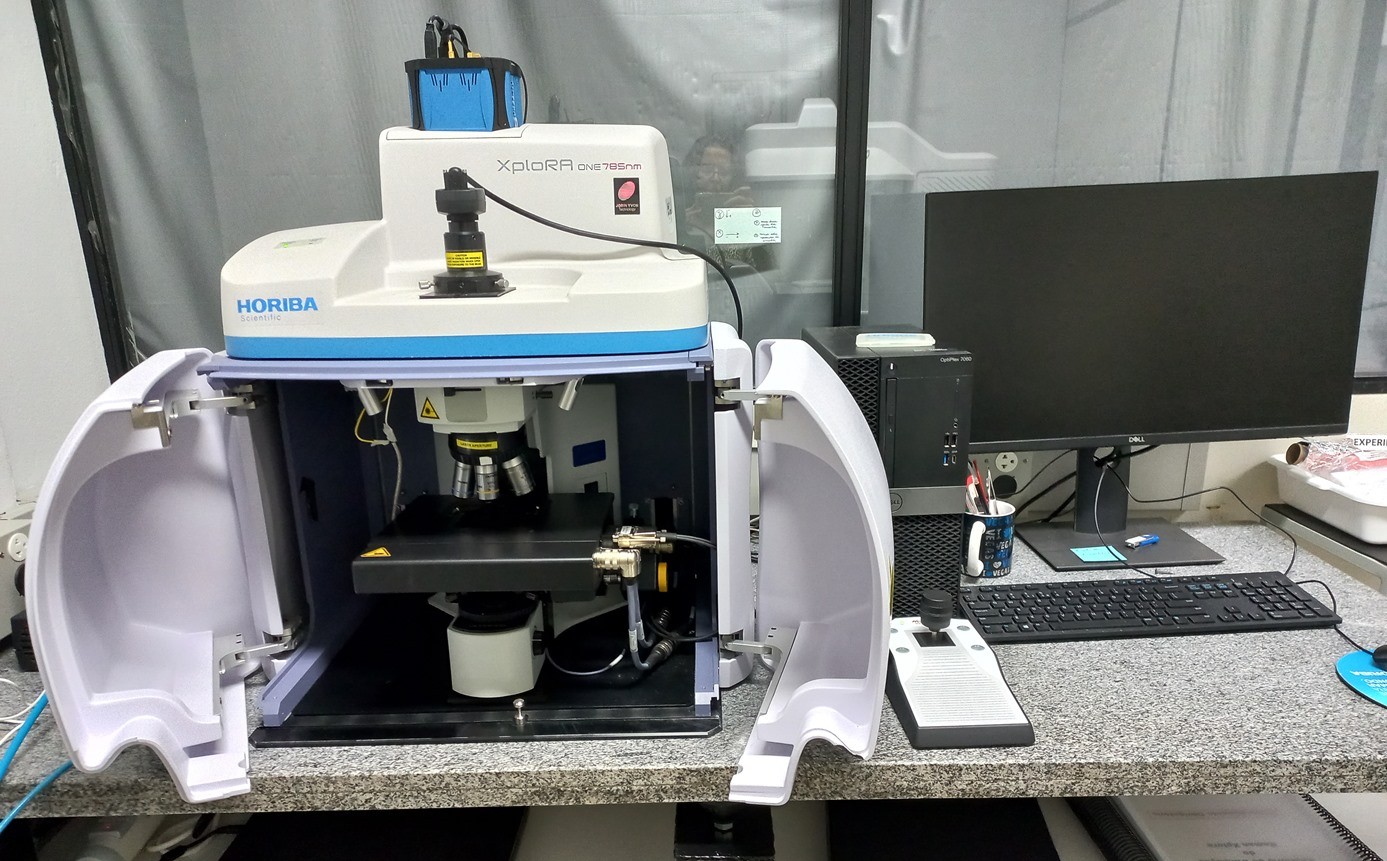
Confocal Raman Spectrometer - Horiba Xplora ONE785
The Horiba Xplora ONE785 Confocal Raman Spectrometer is well-suited for analytical routines and research involving a variety of sample types, especially those prone to fluorescence. Its optimized grating allows the full spectral range to be acquired in a single scan. The system features a true confocal microscope coupled to the spectrometer, enabling non- destructive analysis of small-area and small-volume samples via Raman scattering, as well as photoluminescence measurements.
Sample types: solid, liquid, gas, etc.
Spatial resolution: XY ~1 µm and Z ~2 µm
Spectral resolution: 6 cm⁻¹
Grating: 400 g/mm
Spectral range: 100 cm⁻¹ to 3500 cm⁻¹
Laser: 785 nm
Detection: cooled UV-Vis CCD (256×1024)
Accessories and capabilities:
Motorized XY and Z mapping stage (with Autofocus)
3D imaging
Faster mapping: Swift mode
Linkam heating stage: from 20 to 1500 °C and -196 to 600 °C

Spectrofluorometer - Horiba Fluorolog 3
The Horiba Fluorolog 3 spectrofluorometer is a versatile modular system that enables various types of analyses, including steady-state excitation and emission, kinetics, emission quantum yield, anisotropy, excited-state lifetime, and time-resolved measurements.
Sample types: Solids, liquids, gases, etc.
Spectral resolution: ~0.2 nm (double 1200 g/mm)
Minimum spectral increment: 0.01 nm (double 1200 g/mm)
Light Sources:
Continuous xenon lamp – 450 W
Pulsed xenon lamp – 150 W
14 LEDs (UV-Vis-NIR) and 808 & 980 nm lasers
Detectors:
UV-Vis (PMT and CCD) and NIR (PMT)
Lifetime Measurements:
Phosphorimeter (50 µs to 10 s)
FluoroHubB (10 ns to 100 µs)
Accessories:
Integrating sphere
Nitrogen and helium cryostat
Dewar flask for liquid nitrogen
Peltier heater/cooler (-10 to 110 °C)
Automated polarizers
Linkam heating stages, 20 to 1500 °C and -196 to 600 °C
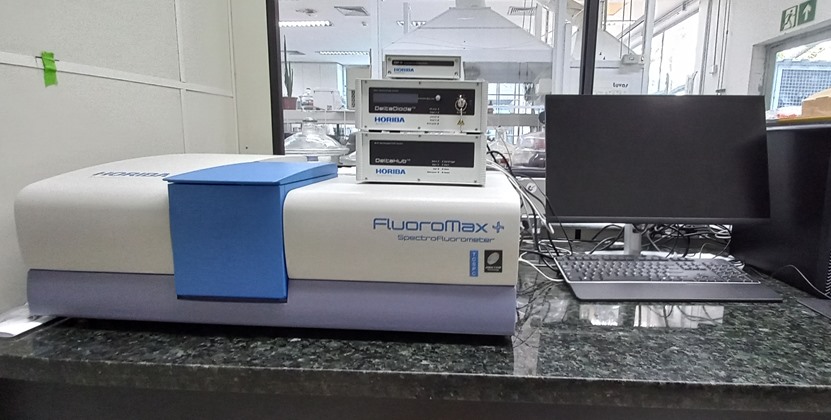
Spectrofluorometer - Horiba Fluoromax Plus
The Horiba Fluoromax Plus spectrofluorometer is a compact system that delivers high sensitivity, excellent performance, and time-correlated single photon counting (TCSPC) lifetime measurements. It is compatible with select accessories from the Horiba Fluorolog 3 spectrofluorometer.
Sample types: solid, liquid, gas, etc.
Spectral resolution: ~0.5 nm (with 1200 g/mm grating)
Minimum spectral increment: 0.05 nm
Lifetime measurements (TCSPC): from 1 ns to 1 s
Light sources:
Continuous xenon lamp – 150 W
Pulsed xenon lamp – 150 W
Pulsed sources at: 285, 340, 375, 405, 440, and 532 nm
Detectors: UV-Vis PMT; spectral range from 185 to 900 nm
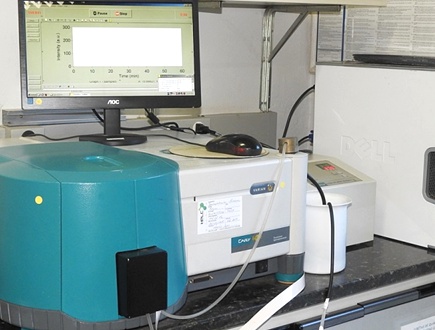
Spectrofluorometer - Agilent Cary Eclipse
Light source: Xenon lamp
Spectral range: 200–900 nm
Slits: 1.5, 2.5, 5, 10, and 20 nm
Scan speed: 0.010 – 24,000 nm/min
Resolution: Less than 1.5 nm
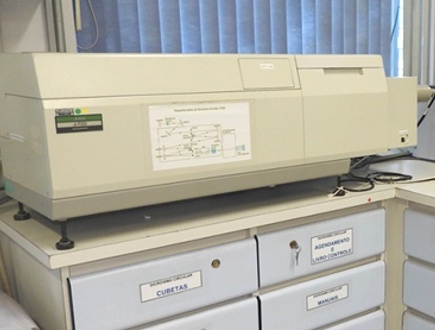
Spectropolarimeter (Circular Dichroism) - Jasco J-720
Light source: 450 W Xenon lamp
Spectral range: 170–800 nm
Bandwidth: 0.1 – 10 nm
Scan speed: 1 – 5000 nm/min

Compact FTIR Interferometer – Arcoptix Rocket (2 – 6 µm)
Unit for infrared spectroscopy consisting of an interferometer and a thermoelectrically cooled (TEC) MCT detector. It operates in the 2 to 6 µm range. It does not include sample compartments or an IR radiation source.
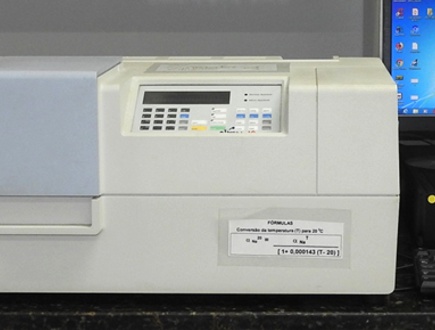
Polarimeter - Perkin Elmer 341
Light sources: Sodium (Na) and Mercury (Hg) lamps.
Spectral lines:
Na: 589 nm
Hg: 546 nm, 436 nm, and 365 nm
Polarizer and analyzer: Calcite prism
Resolution: 0.0010°
Team

Claudia Martelli, B. Sc.

Marcelo Meira Faleiros, Ph. D.

Milene Heloisa Martins, Ph. D.