
Presentation
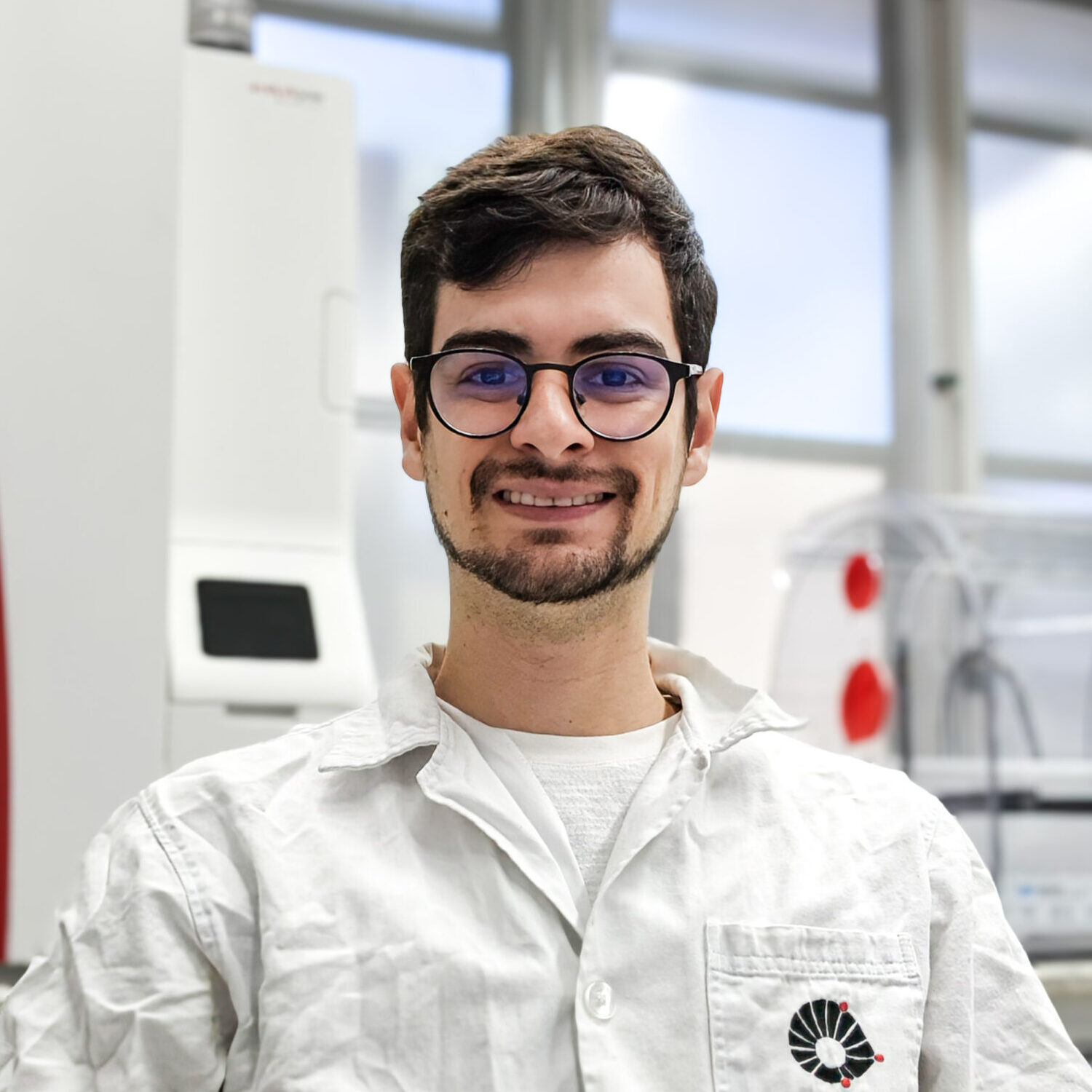
The Institutional Laboratory of Physicochemical Analyses brings together equipment for a variety of analytical techniques, including thermal, mechanical, and chemical analyses, contributing to materials characterization. The laboratory provides reliable, high-quality analyses carried out by a specialized team, serving both the internal and external communities.
Equipment
Details about the equipment that can be found in the laboratory.
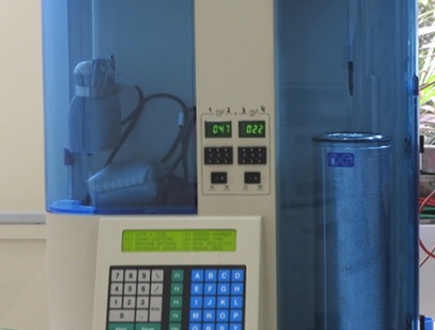
Surface Area Analyzer - Quantachrome Nova4200e
The Nova4200e surface area analyzer enables the determination of surface area, pore volume, and pore size distribution of mesoporous samples (ranging from 0.35 up to over 500 nm).
The equipment features four degassing stations, allowing sample pretreatment at temperatures up to 250 °C. It also allows the simultaneous analysis of up to four samples, with the possibility of performing different types of analyses on each (BET or pore size measurement). The analyses are carried out using nitrogen.
This equipment is essential for the textural characterization of various materials, such as mesoporous silicas, zeolites, coordination polymers, catalysts, among others.
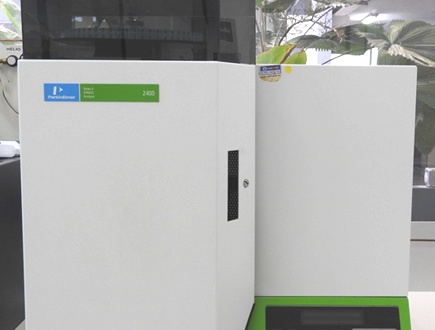
Elemental Analyzer - Perkin Elmer CHN2400
The CHN2400 elemental analyzer enables the rapid determination of carbon, hydrogen and nitrogen percentages in a sample. The analysis involves complete combustion of the sample followed by reduction of the resulting gases, producing CO₂, H₂O, and N₂, which are then measured using a thermal conductivity detector.
The instrument is equipped with an autosampler with a capacity of up to 60 samples.
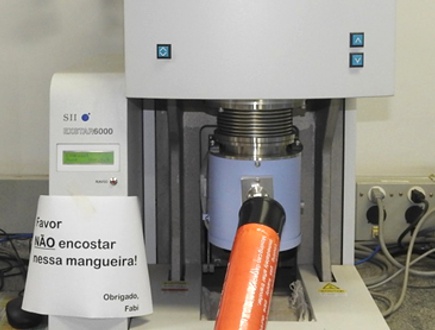
Dynamic Mechanical Analyser - Seiko 6100
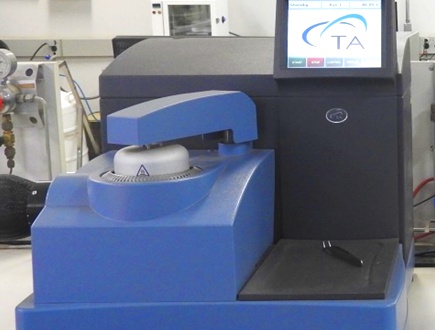
Differential Scanning Calorimeter - TA Instruments Q2000
Operating Temperature Range: –150 to 300 °C.
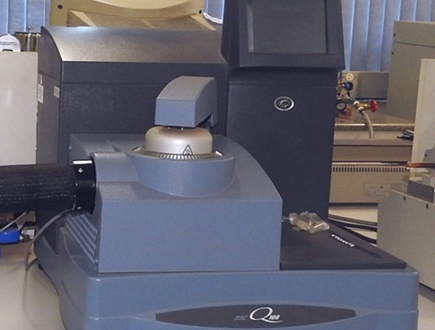
Differential Scanning Calorimeter - TA Instruments Q100
Operating Temperature Range: –90 to 300 °C.
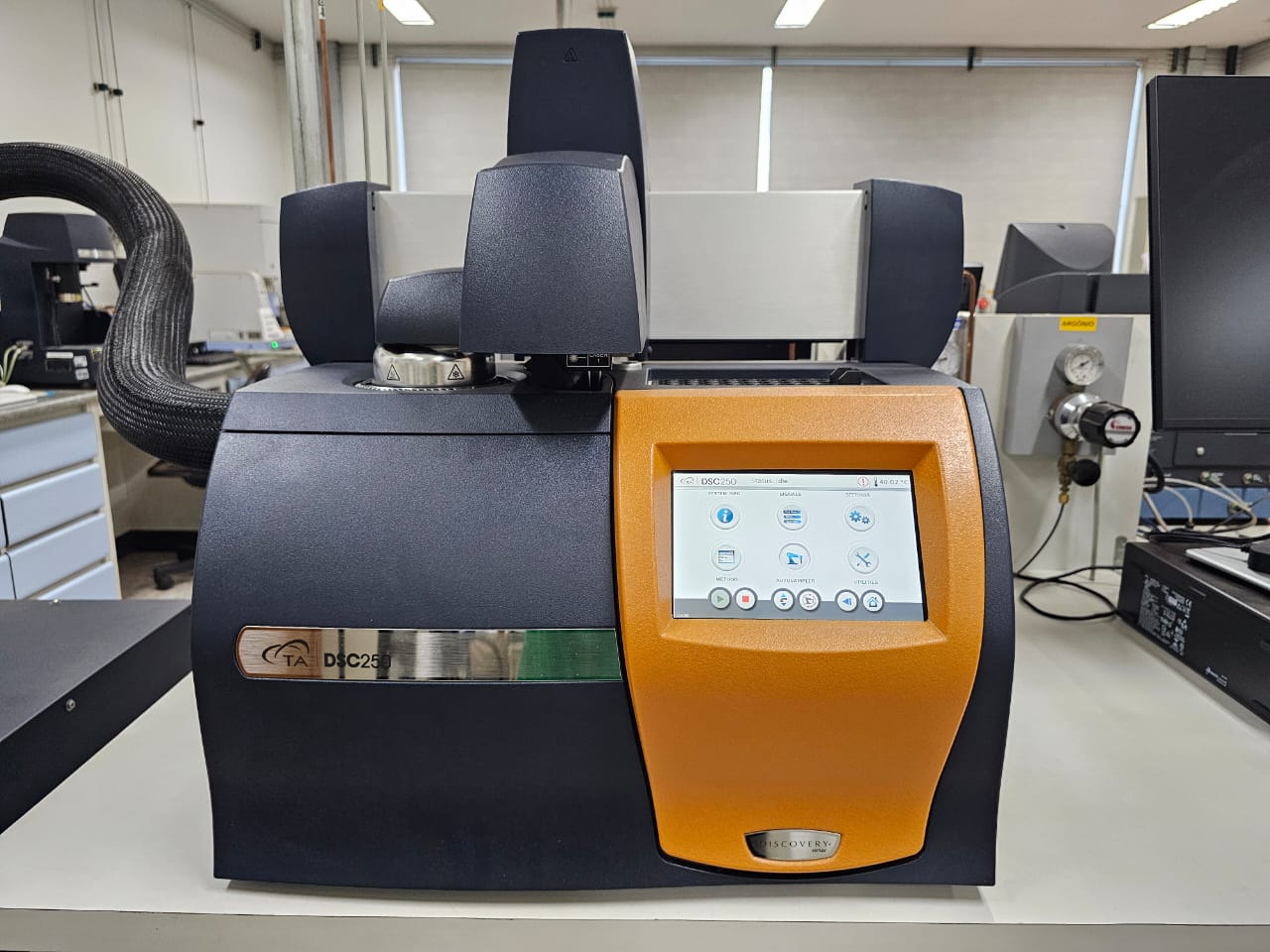
Differential Scanning Calorimeter - TA Instruments DSC 250 Discovery
Operating Temperature Range: –120 to 350 °C.
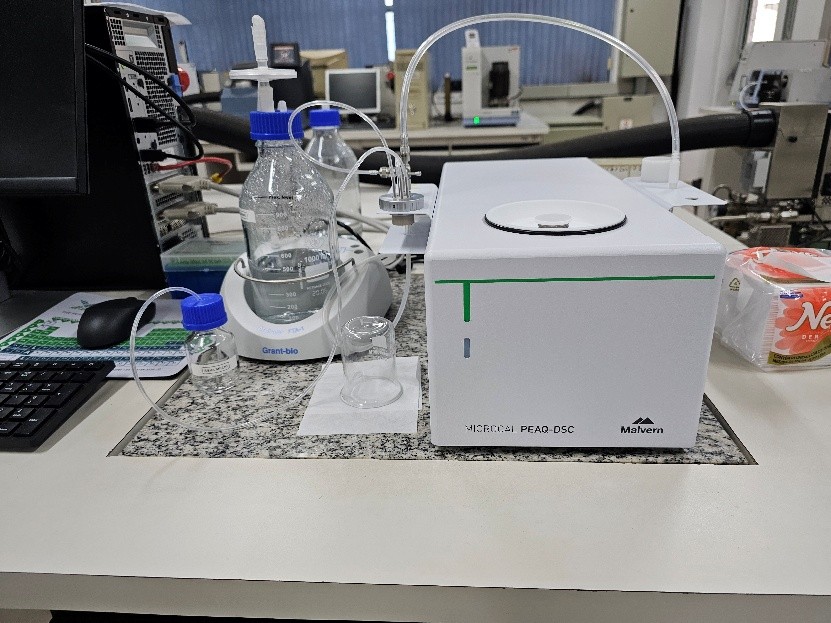
Micro Differential Scanning Calorimeter - Malvern Panalytical PEAQ-DSC
Operating Temperature Range: 2 to 130 °C.
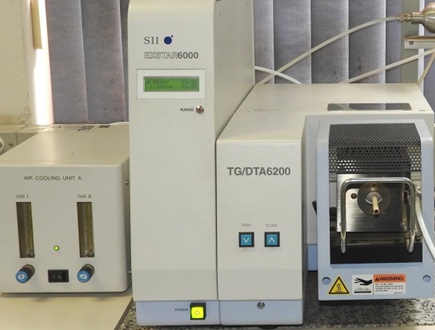
Thermogravimetric Analyser TGA-DTA - Seiko 6200
Operating Temperature Range: 25 to 1100 °C.
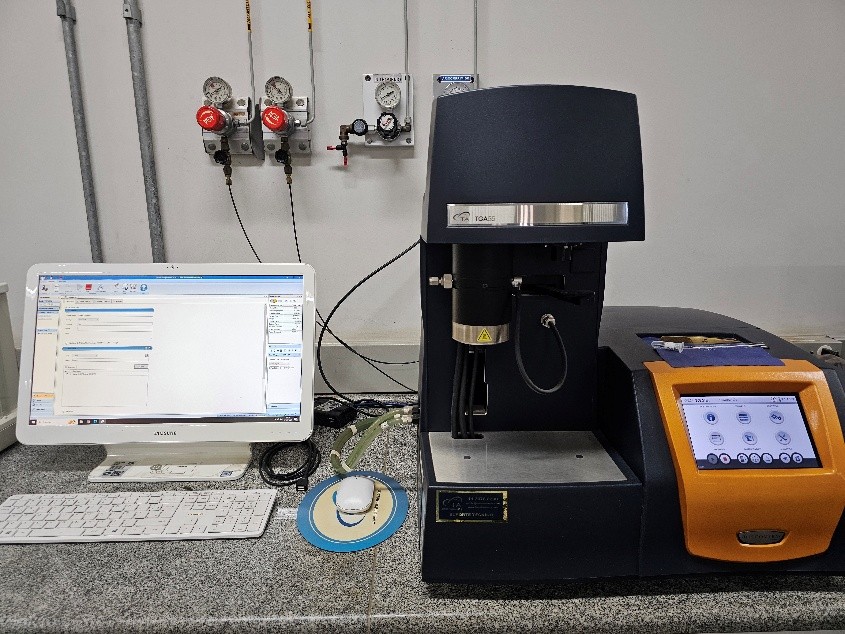
Thermogravimetric Analyser - TA Instruments TGA 55 Discovery
Operating Temperature Range: 25 to 1000 °C.
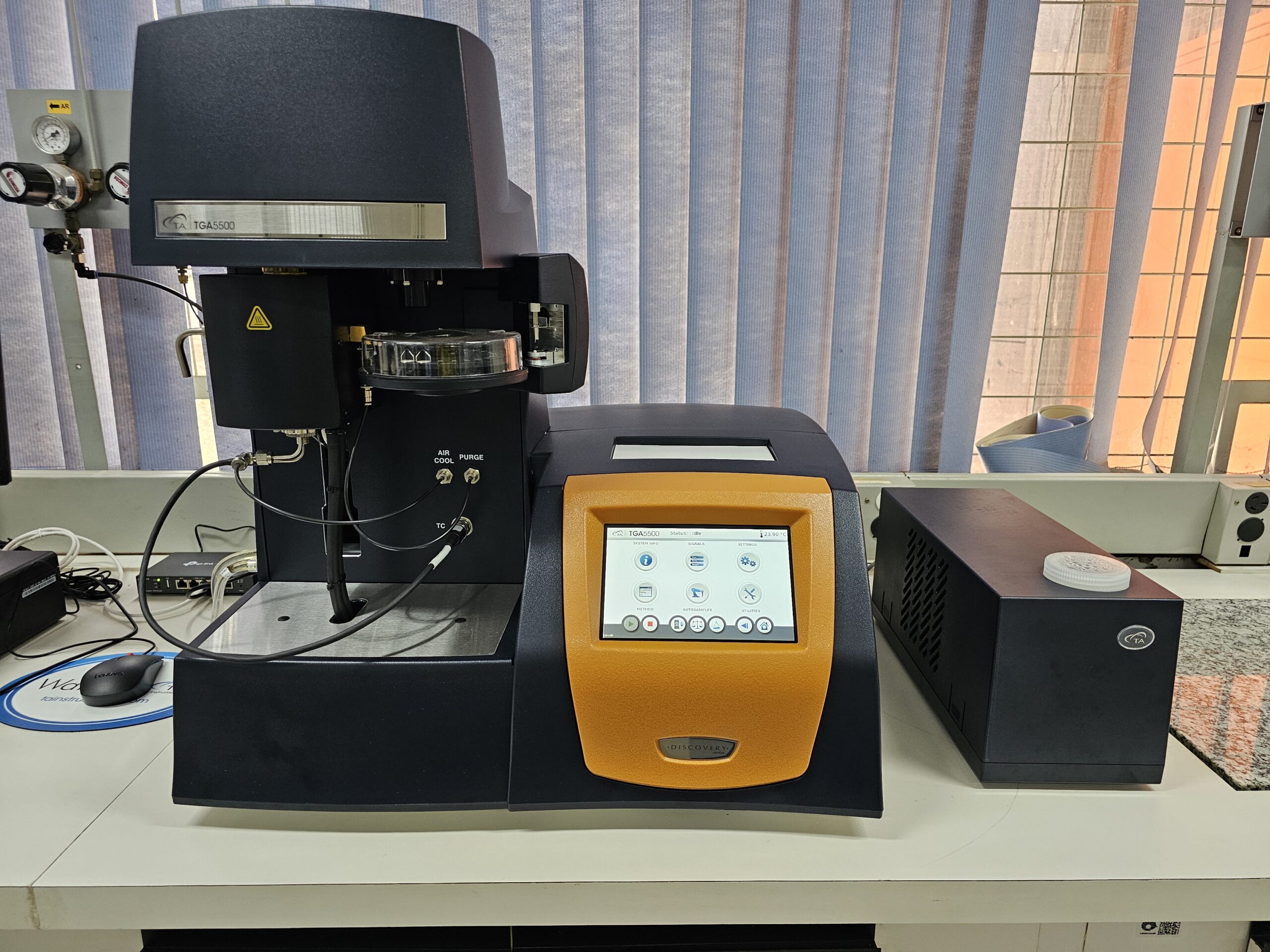
Thermogravimetric Analyser – TA Instruments TGA 5500 Discovery
Operating Temperature Range: 25 to 1100 °C.
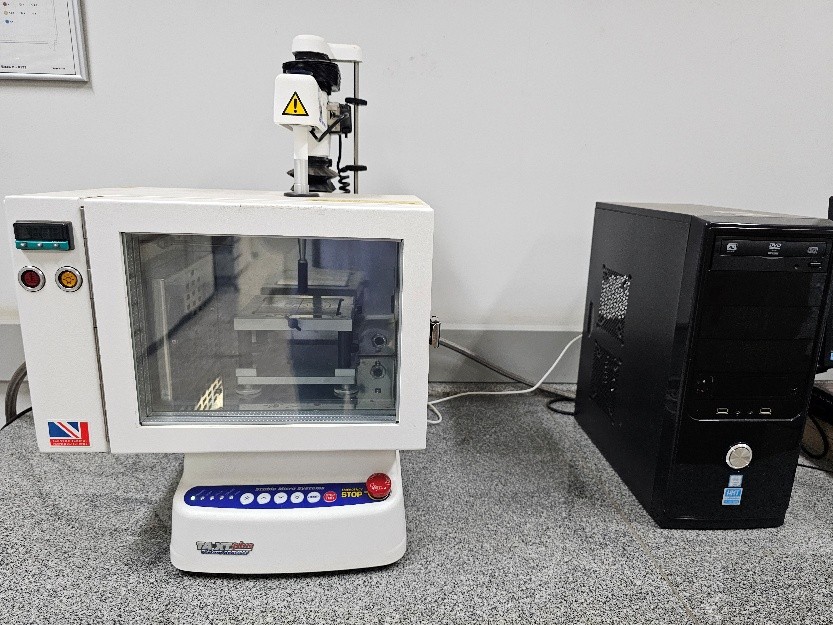
Texturometer - Stable Micro Systems TA.XT plus
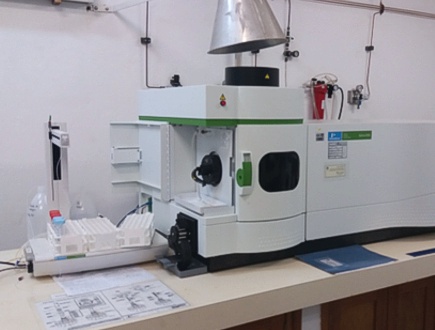
Inductively Coupled Plasma (OES) - Perkin Elmer Optima 8300
The Perkin Elmer 8300 ICP-OES is a spectrometer that uses argon plasma to atomize and ionize elements to determine their concentration. The concentration range for standards and samples is in ppm, but the detection limits can vary according the element being analyzed.
Software: Winlab 32 for ICP – Perkin Elmer.
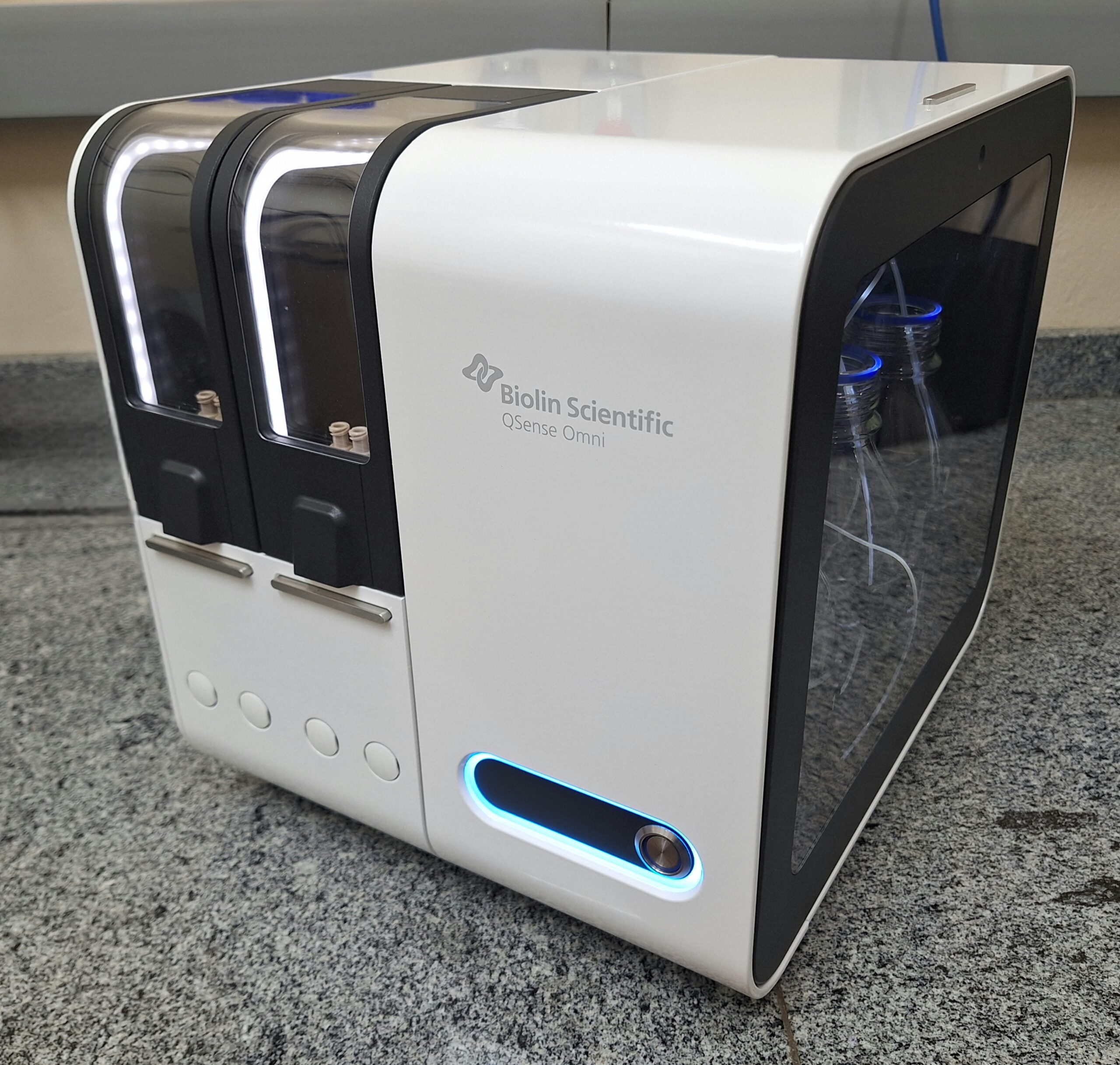
Quartz Crystal Microbalance with Dissipation (QCM-D) – Biolin QSense Omni
The QSense Omni is a highly sensitive quartz crystal microbalance that enables real-time analysis of interactions at surfaces and interfaces. The technique measures changes in mass and viscoelastic properties of thin films based on the response of a quartz sensor.
The instrument is used to characterize adsorption/desorption processes, conformational changes, and molecular interactions. Its main features include:
• High sensitivity and low noise, ensuring reliable detection of subtle molecular events. Real-time kinetic monitoring is possible.
• Two independent measurement channels with precise temperature control, allowing parallel experiments under varied conditions.
• Variety of sensor surfaces, including gold, cellulose, aluminum oxide, and silica.
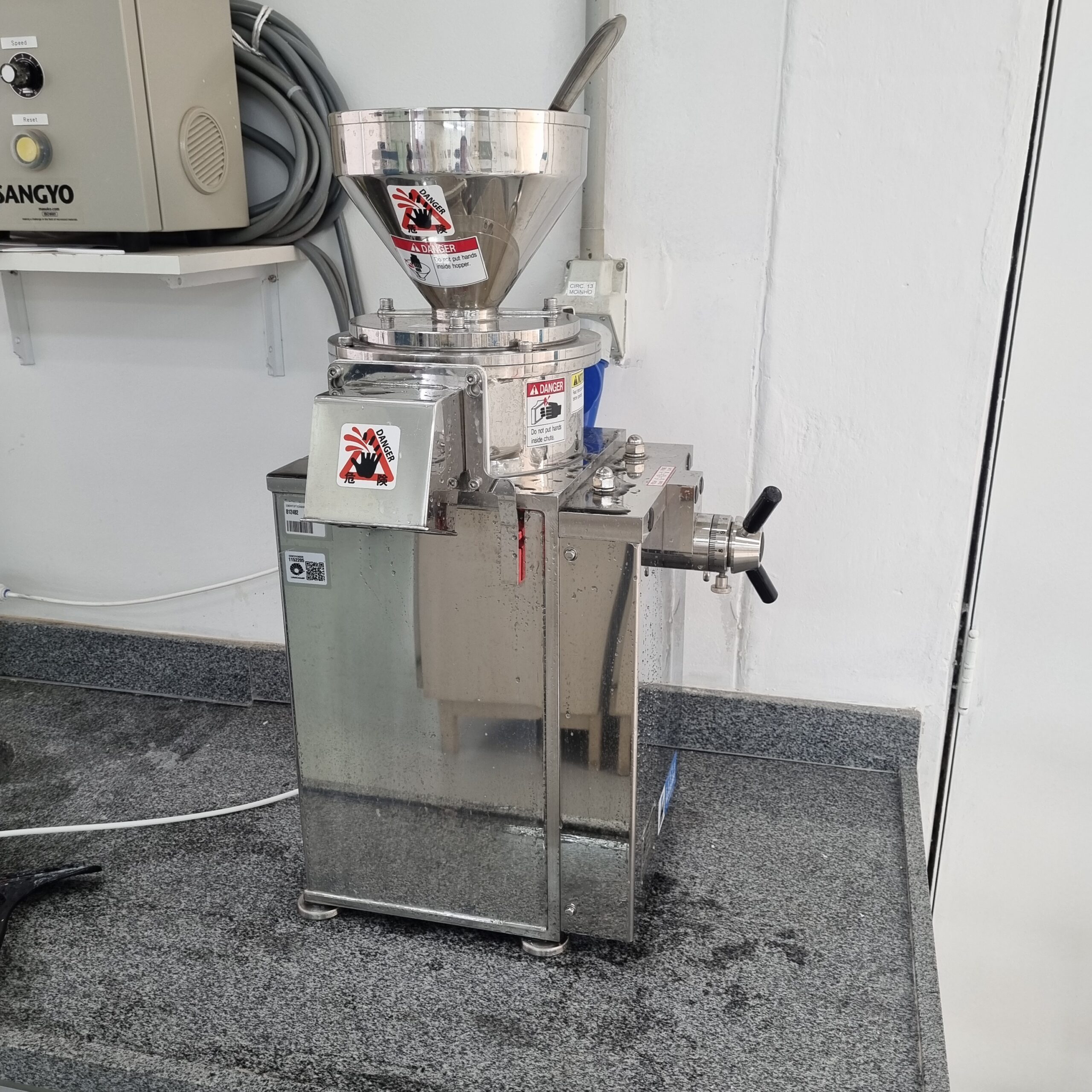
Shear Mill – Masuko MKCA6-5
The Masuko Supermasscolloider is a high-performance friction mill capable of producing ultrafine particles. It is ideal for both wet and dry grinding of a wide range of materials, yielding samples that resemble pastes, gels, or very fine powders. The mill operates with two non-porous ceramic grinding disks, with a precisely adjustable gap that allows control over particle size. While one disk remains fixed, the other rotates at high speed, subjecting the material to compression, shear, and friction forces. The micrometric adjustment of the disk spacing enables precise control of the desired particle size distribution.
Applications: It is suitable for shearing materials to obtain micro- and nanoscale particles from various samples, with applications in the food, pharmaceutical, and chemical industries. Typical uses include cellulose nanofiber production, food processing (such as grains, fruits, meats, and vegetables), mineral grinding, composite production, and emulsification of greases and cosmetics.
Capacity: For liquid samples, processes volumes starting from 1 liter, with 100% material recovery after milling.
Motor: 3.7 kW;
Speed (RPM): 1000 – 3000;
Structure: Stainless steel construction with cooling jacket.
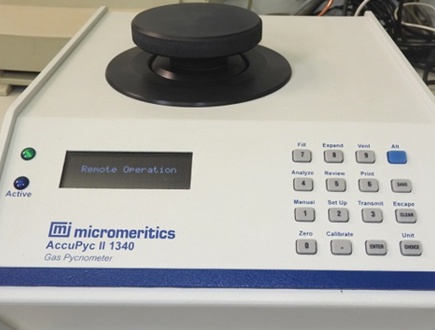
Helium Pycnometer - Micromeritics Accupyc 1330
The helium pycnometer is used to determine the true density and volume of materials.
This non-destructive technique determines the volume occupied by a given amount of material by comparing the change in helium pressure between the sample chamber and a calibrated reference chamber. Helium is typically used because, in addition to being inert, it easily penetrates the pores of the samples, allowing for a more accurate determination of the solid volume.
The laboratory has sample holders with volumes of 3.5 and 10 cm³.
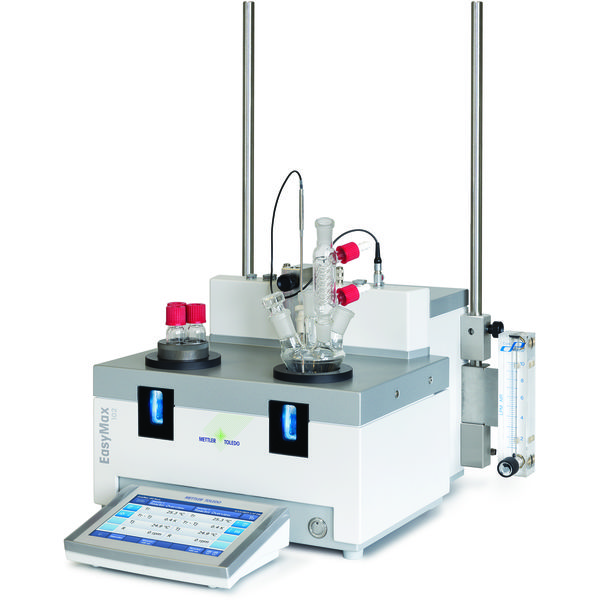
Automated Reactor – EasyMax 102
Equipped with magnetic stirring.
Temperatures ranging from –40 °C to 180 °C.
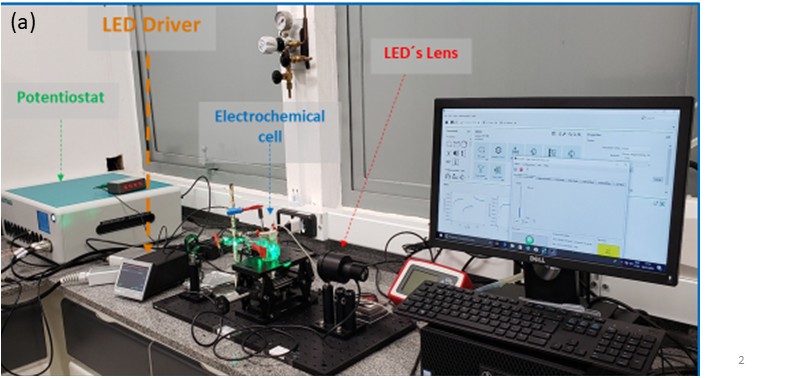
Integrated System for Photoelectrochemical Measurements
Team
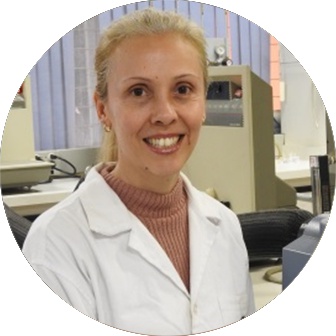
Fabiana Madeira Favoretto, Chemistry Technician